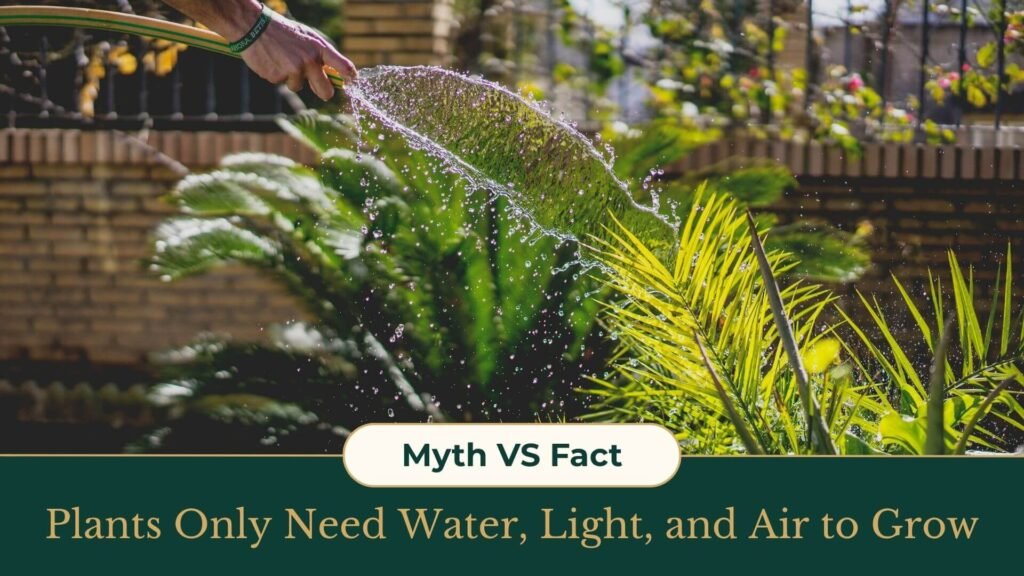
Plants only need water, light, and air, or so the saying goes. This is one of the most repeated pieces of plant advice passed between beginners, and it contains just enough truth to sound convincing. The problem is that it leaves out several requirements that determine whether a plant merely survives for a few weeks or actually thrives for years. Understanding what plants genuinely need changes how you care for them and why certain problems keep coming back no matter how faithfully you water.
The Myth: Plants Only Need Water, Light, and Air
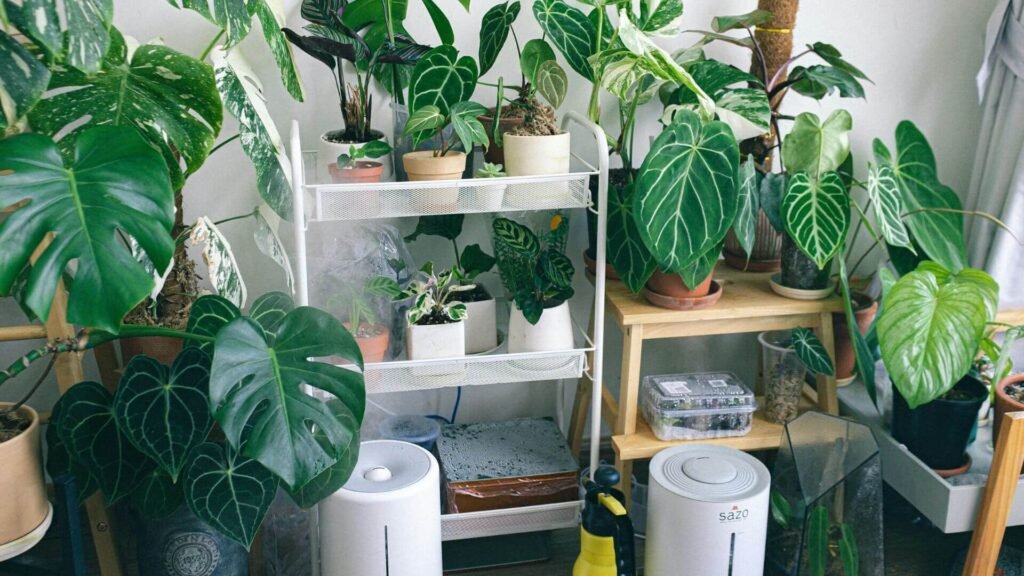
The claim that plants only need water, light, and air is a simplified version of how photosynthesis works, not a complete picture of what plants need to grow.
Photosynthesis does require light, water, and carbon dioxide from the air. But photosynthesis is only one process among many that keep a plant alive and growing. Plants also need mineral nutrients absorbed through the roots, suitable temperatures, appropriate humidity, and enough root space to function. Reducing plant care to three inputs is like saying humans only need food, water, and oxygen, technically true for bare survival but leaving out sleep, temperature, shelter, and everything else that makes life sustainable.
Practical insight: If your plant looks like it is merely surviving rather than growing, the missing variable is rarely more water or more light. It is usually nutrients, humidity, or root conditions.
What Plants Actually Need Beyond Water, Light, and Air
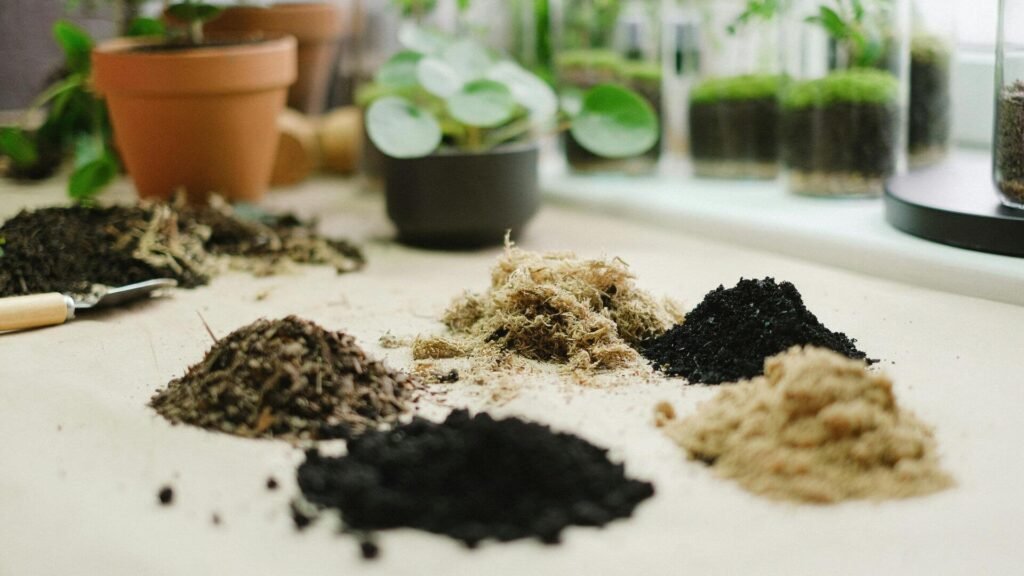
Plants need mineral nutrients, suitable temperatures, adequate humidity, and appropriate root space in addition to water, light, and air.
University extension sources explain that while photosynthesis produces carbohydrates from light, water, and carbon dioxide, the plant still depends on mineral nutrients absorbed through the root system for virtually every other biological process. Nitrogen supports leaf and stem growth. Phosphorus supports root development and flowering. Potassium regulates water movement within the plant. Without these and other trace minerals, plants show clear signs of deficiency even when light and water are perfectly managed.
Practical insight: Yellowing leaves in a well-lit, well-watered plant are often a nutrient deficiency, not a light or water problem. A diluted balanced fertilizer during the growing season addresses this directly.
Why the Myth That Plants Only Need Water, Light, and Air Persists
The myth persists because many common houseplants appear to survive on minimal care for a surprisingly long time, which makes the oversimplification seem accurate.
Beginners often see a pothos or snake plant endure months of basic watering in low light and assume the simple rule is working. What is actually happening is that hardy houseplants have large nutrient reserves and stress tolerance built up over time, so decline is slow and gradual rather than sudden. The phrase also spreads because it is easy to remember. A more accurate version, that plants need light, water, carbon dioxide, mineral nutrients, temperature stability, humidity, and root space, is harder to pass on in conversation.
Practical insight: A plant that looks acceptable is not always a plant that is thriving. Slow growth, small new leaves, and faded colour are signs that something beyond water and light is missing.
Do Plants Only Need Water, Light, and Air for Photosynthesis?
Plants use water, light, and carbon dioxide specifically for photosynthesis, but that process alone does not account for all plant growth and health.
Photosynthesis produces glucose, which the plant uses as an energy source. But the plant needs mineral nutrients to build that glucose into leaves, stems, roots, and flowers. Temperature affects how efficiently photosynthesis and nutrient uptake occur. Humidity affects how much water a plant loses through its leaves and how it regulates internal moisture. Even pot size matters, because a rootbound plant cannot absorb nutrients and water efficiently regardless of how much light and water it receives.
Practical insight: Think of photosynthesis as the engine and nutrients, temperature, and humidity as the fuel system, oil, and cooling. The engine cannot run well without the rest.
How Light, Water, and Nutrients Work Together
Light, water, and nutrient availability are interconnected, and changing one affects how much of the others a plant actually needs.
University of Minnesota Extension notes that low light reduces a plant’s water use, which is exactly why overwatering becomes so easy in dimly lit rooms. Flora Grubb’s indoor plant guidance shows that watering frequency depends not just on the plant type but on light levels, airflow, humidity, pot size, and temperature, meaning there is no universal watering rule. Maryland Extension highlights that light intensity, duration, and quality all affect plant performance, and that too much direct light can be just as damaging as too little.
Practical insight: Before changing your watering schedule, check the light level first. In Canadian winter, lower light means lower water needs, and continuing a summer watering routine through December is one of the most common reasons plants decline.
Common Myths and Mistakes About Basic Plant Care
- Watering on a fixed schedule instead of checking soil dryness and light conditions
- Skipping fertilizer because the plant looks fine, when slow growth is already a deficiency sign
- Assuming a plant in a low-light corner only needs less water and nothing else changes
- Using plain water in hydroponic setups instead of nutrient-enriched water
- Ignoring temperature near windows in Canadian winter, where glass creates cold zones that stress roots
- Treating all plants the same when light, humidity, and nutrient needs vary significantly by species
Quick Reference: What Plants Actually Need to Thrive
| Plant Need | What It Does | Common Indoor Problem |
|---|---|---|
| Light | Powers photosynthesis and glucose production | Too little causes leggy, pale growth |
| Water | Transports nutrients and supports cell structure | Too much in low light causes root rot |
| Carbon dioxide | Raw material for photosynthesis | Rarely deficient indoors |
| Mineral nutrients | Builds leaves, roots, stems, and flowers | Deficiency causes yellowing, slow growth |
| Temperature | Regulates metabolic processes | Cold drafts near windows stress roots |
| Humidity | Controls water loss through leaves | Too low causes brown leaf tips |
| Root space | Allows nutrient and water uptake | Rootbound plants decline despite good care |
Final Takeaway
Plants only need water, light, and air is a starting point, not a complete guide. It explains one process, photosynthesis, but leaves out the nutrients, temperature, humidity, and root conditions that determine whether a plant actually grows well over time. The most common houseplant problems, including yellowing leaves, stunted growth, and slow decline despite regular watering, are almost always caused by the factors this myth ignores.
At Leafy Belief, we find that people who understand their plants deeply also connect with them differently. That same appreciation for what plants actually need is what drives our botanical designs. If plants are part of how you see the world, explore our plant necklaces, plant earrings, plant bracelets, and plant rings, each one rooted in the real forms and quiet resilience of the plants you already love.
Enjoyed this? Explore our Myth vs Fact series for more honest plant science, and visit our Plant Care guides for practical advice on light, nutrients, and seasonal care.